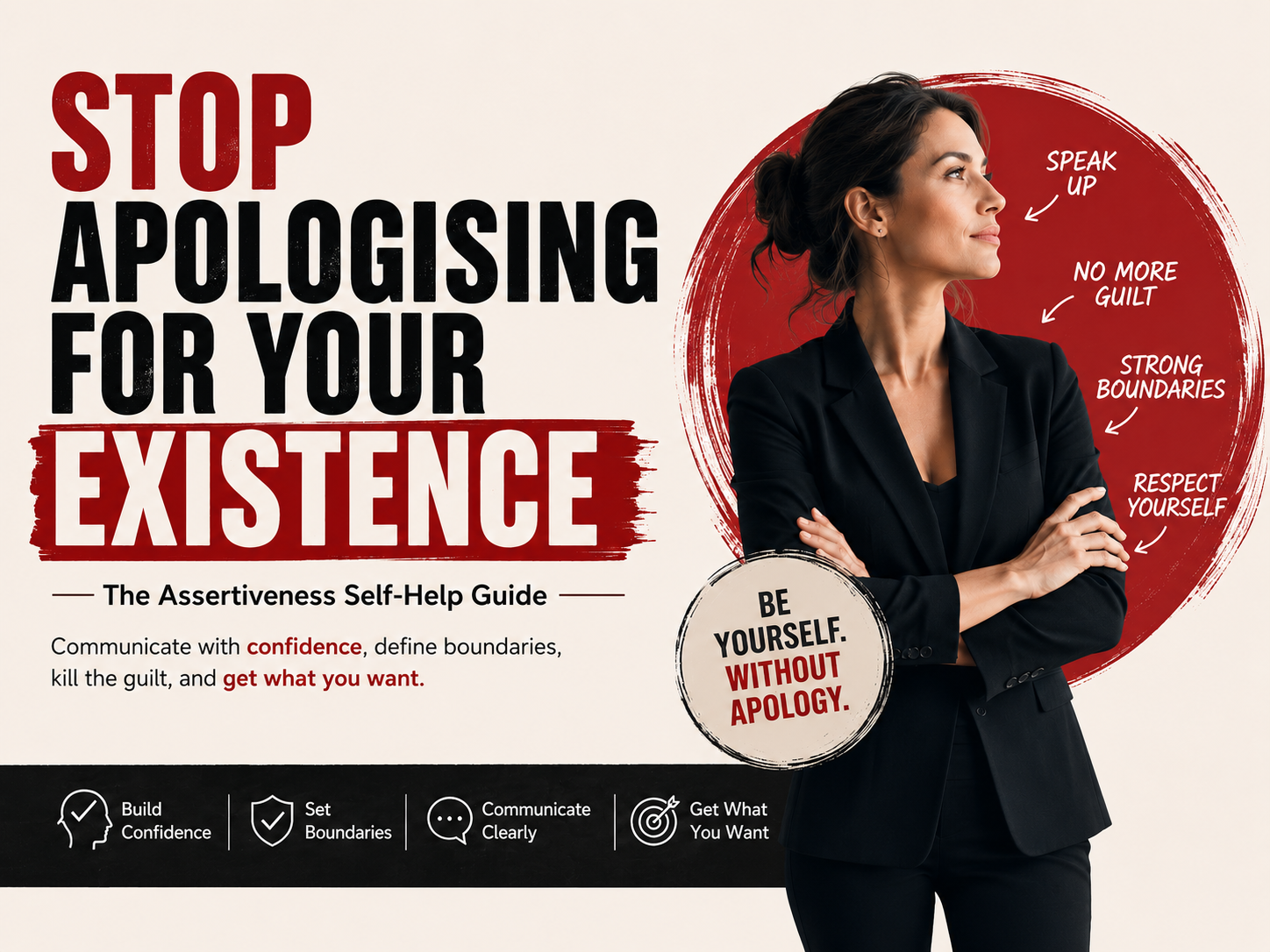
Stop shrinking yourself to make other people comfortable.
If you constantly over-explain, say “sorry” when you’ve done nothing wrong, avoid difficult conversations, or struggle to set boundaries without feeling guilty, this guide was written for you.
Stop Apologising for Your Existence is a practical, evidence-informed self-help guide that helps you develop genuine assertiveness—not aggression, not passivity, but the confidence to communicate your needs with clarity, respect, and self-respect.
Unlike books filled with theory, this guide focuses on actionable exercises, self-assessments, and workplace-ready techniques that you can start applying immediately.
Inside You’ll Learn How To:
- Identify whether your communication style is passive, aggressive, passive-aggressive, or assertive.
- Uncover the hidden beliefs and expectations that make saying “no” feel uncomfortable.
- Build healthier personal standards and stronger emotional boundaries.
- Express your thoughts, opinions, and needs confidently without guilt.
- Use assertive language that earns respect while maintaining positive relationships.
- Improve your body language, presence, and confidence in conversations.
- Handle criticism, difficult people, workplace conflict, meetings, interviews, and presentations with greater composure.
- Develop lasting assertive habits through a structured 30-day action plan.
What’s Included
- Self-assessment tools
- Guided reflection exercises
- Practical worksheets
- Communication frameworks
- Real-world workplace applications
- A complete 30-day assertiveness development plan
Who Is This Guide For?
This guide is ideal for:
- Professionals who struggle to speak up in meetings.
- Leaders and managers who want to communicate with confidence and clarity.
- People who find it difficult to say “no” without feeling guilty.
- Anyone who avoids conflict, over-apologises, or puts everyone else’s needs before their own.
- Individuals looking to strengthen boundaries while maintaining healthy relationships.
What You’ll Walk Away With
By the end of this guide, you’ll have a practical toolkit to communicate more confidently, establish healthier boundaries, respond instead of react, and advocate for yourself without guilt or apology.
Because confidence isn’t about being the loudest person in the room.
It’s about knowing your worth—and communicating it with clarity.