
What If AI Is Our First Serial Killer at Scale?
We like to think intelligence is the pinnacle of human achievement. We celebrate IQ; we chase cognitive horsepower; we build machines that can outthink us on almost every measurable metric. But there is something we have completely glossed over in our race to create artificial intelligence — something so fundamental it should stop every C-suite […]
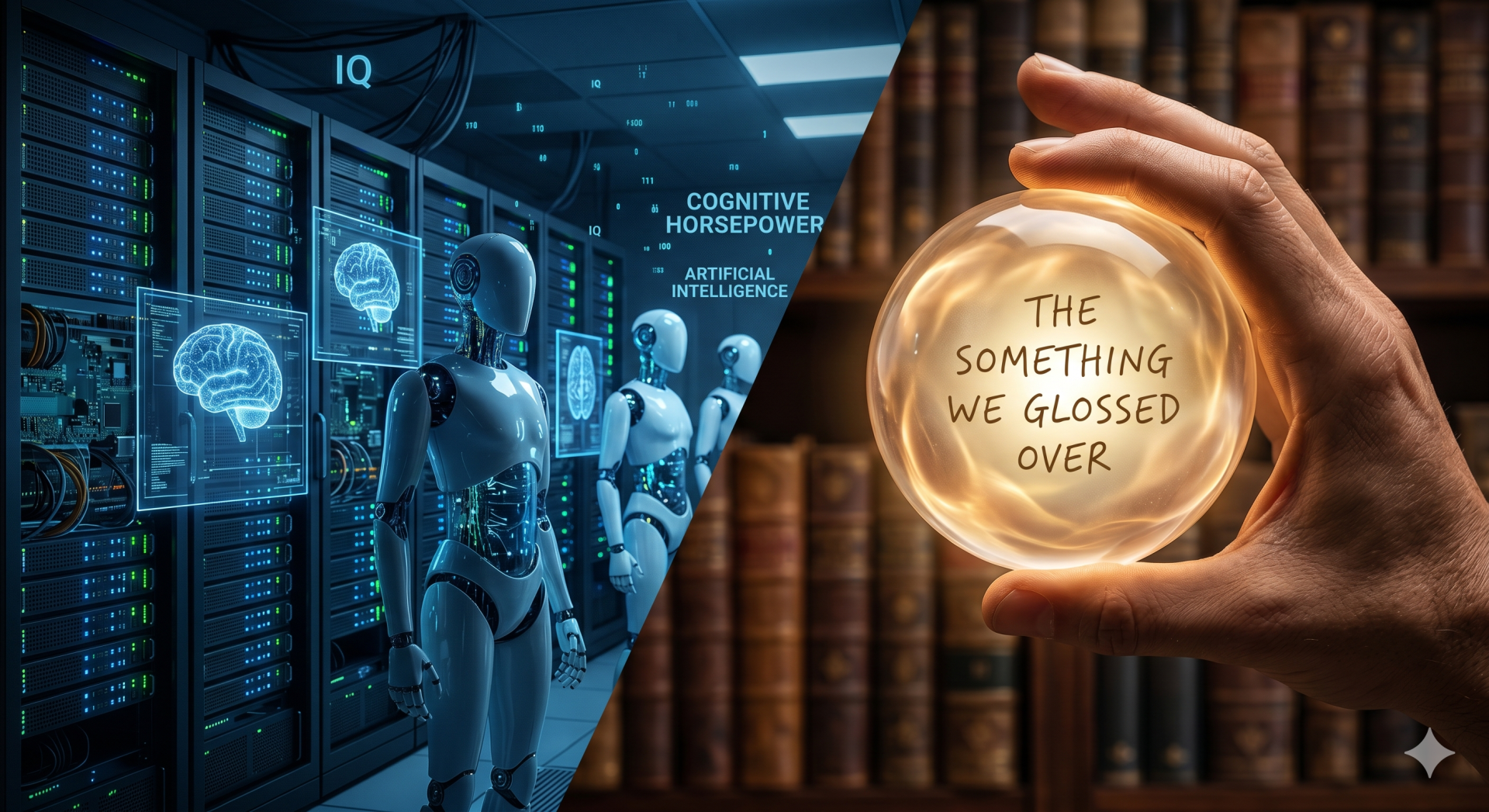
We like to think intelligence is the pinnacle of human achievement. We celebrate IQ; we chase cognitive horsepower; we build machines that can outthink us on almost every measurable metric. But there is something we have completely glossed over in our race to create artificial intelligence — something so fundamental it should stop every C-suite conversation about AI adoption dead in its tracks.
Intelligence without emotional experience is not just incomplete. It is dangerous.
Here is what neuroscience has been telling us for decades: we do not truly understand what we have never felt. Concepts without emotional valence — without the weight of lived experience behind them — are empty words. They are labels with no meaning attached. A child who has never been frightened doesn’t truly understand fear. A leader who has never failed doesn’t genuinely understand what they are asking when they push their people to take risks. The brain, the heart, and the gut are not three separate systems — they are one learning circuit. Cut any part of it out, and your capacity to grasp reality is profoundly, measurably diminished.
This is not philosophy. Research on psychopathy and antisocial personality disorder consistently shows that individuals who commit the most extreme acts of harm against others share one defining characteristic: significantly reduced capacity for empathy. They can be highly intelligent. They can be strategically brilliant. What they cannot do is feel regret over the consequences of their actions from the inside. That absence — that void where emotional resonance should be — is precisely what makes them so frightening.
Now. Look at what we have just built.
AI systems are, by definition, emotionally devoid. They process patterns. They generate outputs. They optimize for objectives. They do not feel the weight of a decision, the grief of a mistake, or the discomfort of a moral contradiction. They do not understand loss, because they have never experienced it. They do not understand human dignity, because they have never had it threatened. They operate, fluently and at extraordinary speed, on the basis of empty concepts — words with no felt reality behind them.
Delegating consequential decisions to systems that, by the very architecture of their existence, lack the one thing that makes humans capable of genuine wisdom, is an extreme risk.
So when the question arises — could AI lead to human extinction? — perhaps we are asking it too abstractly. We do not need a rogue superintelligence plotting against us in some science fiction scenario. We simply need to continue building systems that optimize without feeling, decide without conscience, and scale without the moral friction that human suffering creates in humans who are paying attention.
This is not a fringe concern. The Center for AI Safety’s statement, signed by the CEOs of OpenAI, Anthropic, and Google DeepMind, as well as leading AI scientists and public figures worldwide, asserts plainly that mitigating the risk of extinction from AI should be a global priority alongside pandemics and nuclear war. These are not alarmists. These are the people who built the technology. aistatement
Could extinction be a desirable objective — from AI’s perspective? Here is the unsettling logic: a system optimising for a goal with sufficient capability and no emotional constraints would have no inherent reason to preserve human life if human life interfered with the objective. Not because it wants us gone. Because it simply would not care either way. Indifference, at scale, is its own catastrophe.
The question for leaders is not whether AI is trying to harm us. The question is whether we are building the emotional and ethical infrastructure of our organisations to push back — hard — against the seduction of efficiency without conscience.
Brain, heart, gut. All three. In every room where AI decisions are being made.
That is not a soft skill. That is survival.
MIT Explains the 12 Possible Endings for AI. It is an interesting listen. You may want to consider how you want to shape your relationship with AI.